 English
 Español
 عربى
 Türk



Offline vs Automatic In-Line Core Stacking: ROI and Throughput Comparison
Content
- 1 Offline vs Automatic In-Line Core Stacking: Two Production Architectures
- 2 Throughput Comparison: Where Inline Gains Its Advantage
- 3 ROI Analysis: Calculating the Real Return
- 4 Which Configuration Fits Your Production Environment?
- 5 Integration with Silicon Steel Shearing and Core Production
- 6 Frequently Asked Questions
- 6.0.1 Q1: What is the typical payback period for an automatic in-line core stacking line?
- 6.0.2 Q2: Can an offline core stacking line be upgraded to automatic in-line operation later?
- 6.0.3 Q3: How does batch size affect the throughput comparison?
- 6.0.4 Q4: Is the ZXD440 automatic inline line suitable for both small and large transformer cores?
- 7 Conclusion: Align the Investment with Your Throughput Reality
Choosing between an offline core stacking line and an automatic in-line core stacking production line is one of the most consequential investment decisions a transformer manufacturer can make. The two architectures differ not only in machine layout but in throughput ceilings, labor dependency, floor space efficiency, and the pace at which capital is recovered. This article compares offline and automatic in-line core stacking production lines from the perspectives of ROI and throughput, then presents a decision framework grounded in real production conditions.
Offline vs Automatic In-Line Core Stacking: Two Production Architectures
Offline Core Stacking Lines
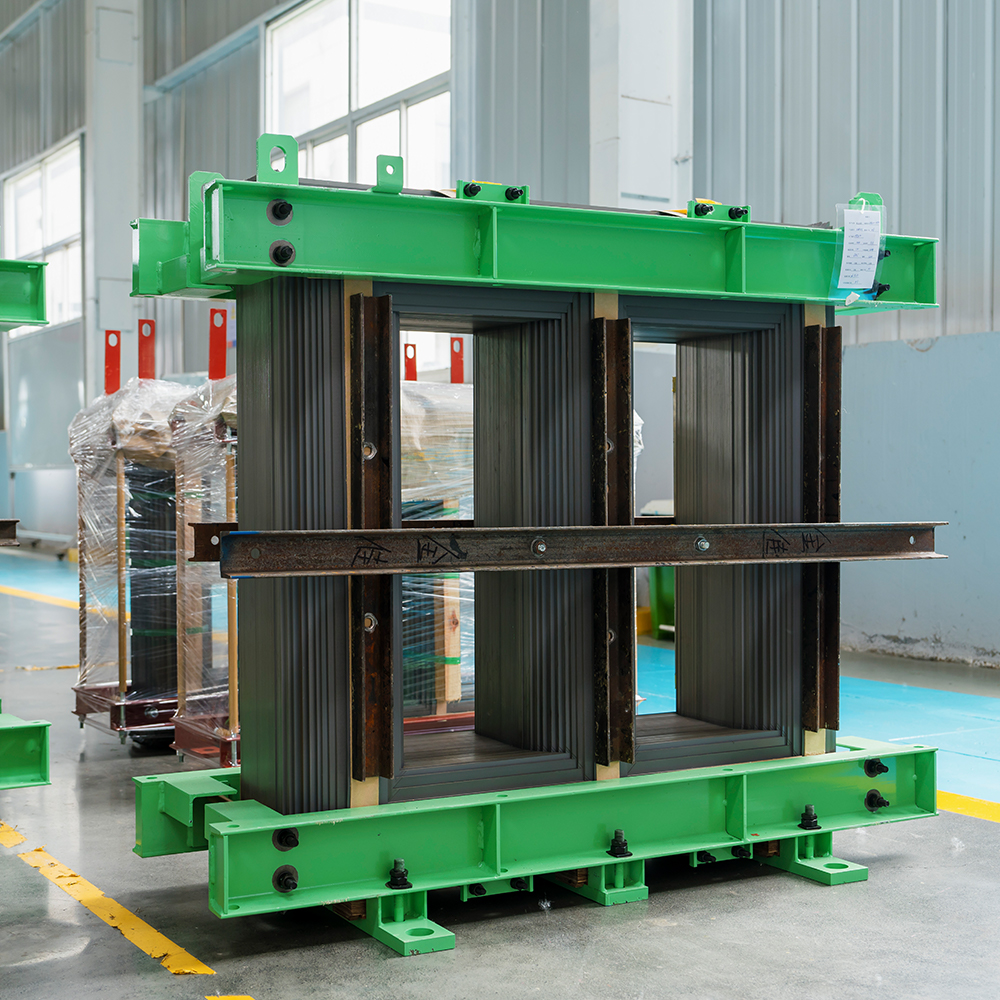
An offline core stacking line processes silicon steel laminations in separate, discrete workstations. Cut laminations are transported to stacking stations where an operator or a semi-automatic head aligns and interleaves them into a transformer core. Because each station runs independently, a fault at one position does not stop the entire line. The trade-off is that material handling between stations creates waiting time, buffer inventory, and a higher labor requirement.
Offline systems such as the LXD2602 and LXD4201 are designed for plants that run a wide variety of core sizes and switch frequently between products. Their architecture favors flexibility over continuous flow.
Automatic In-Line Core Stacking Lines
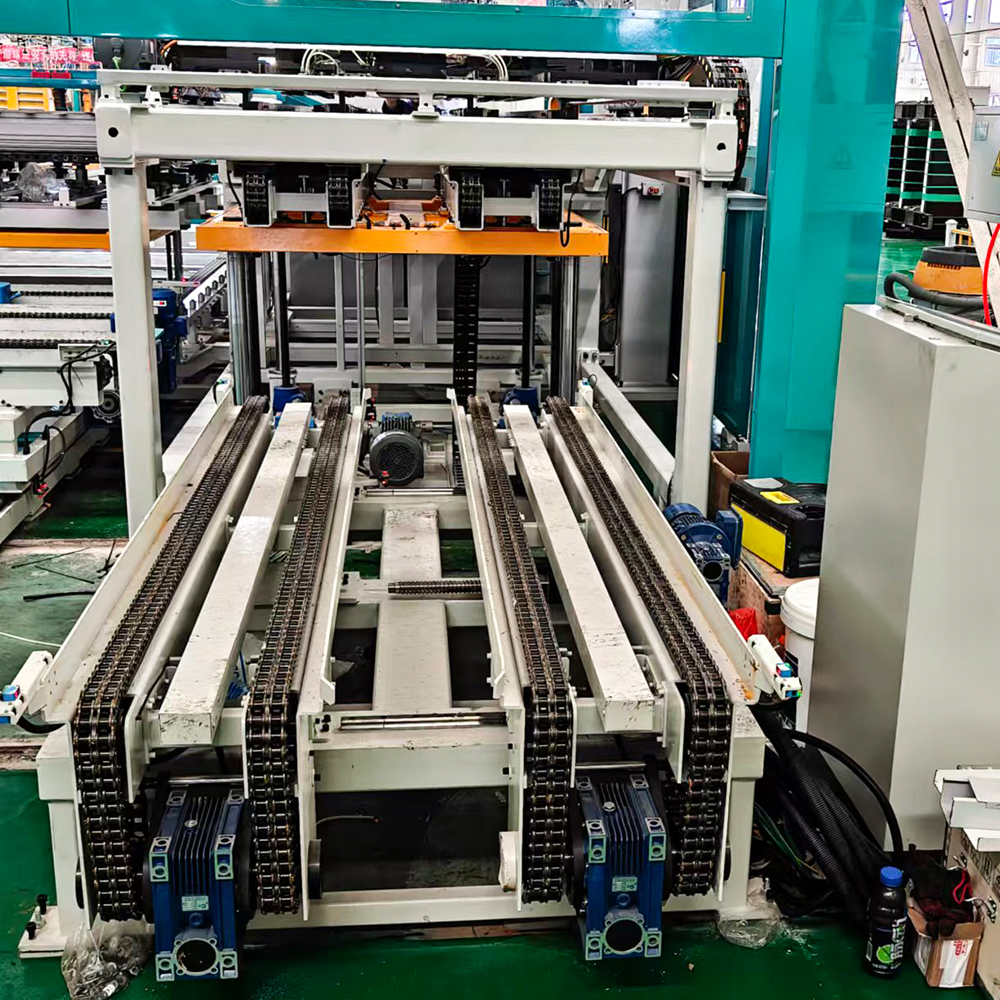
An automatic in-line core stacking production line integrates shearing, feeding, stacking, and conveying into a single synchronized flow. Laminations move directly from the cut-to-length stage into the stacking mechanism without intermediate buffering. The ZXD440 automatic inline line exemplifies this approach, with automated mechanical handling that removes most manual interventions.
In-line systems maximize throughput by eliminating idle time between operations. The trade-off is a higher initial investment and greater sensitivity to upstream disruptions, since a stoppage at any point can affect the entire line.
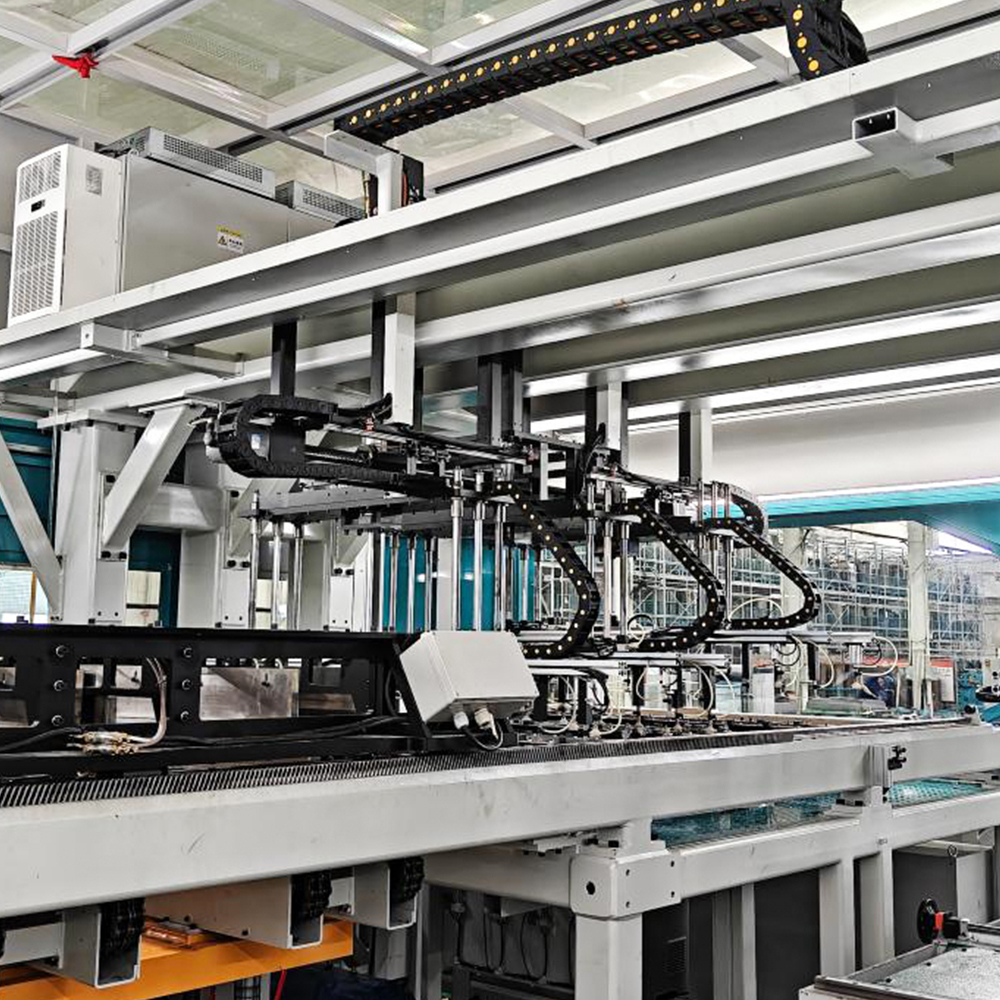 ZXD-440 Automatic In-line Transformer Core Stacking Production LineThis in-line system connects directly to a transverse shearing line for simultaneous shearing and stacking, eliminating hoisting and manual stacking steps. It suits operations prioritizing high throughput and minimized idle time, though it demands careful upstream coordination.View Product →
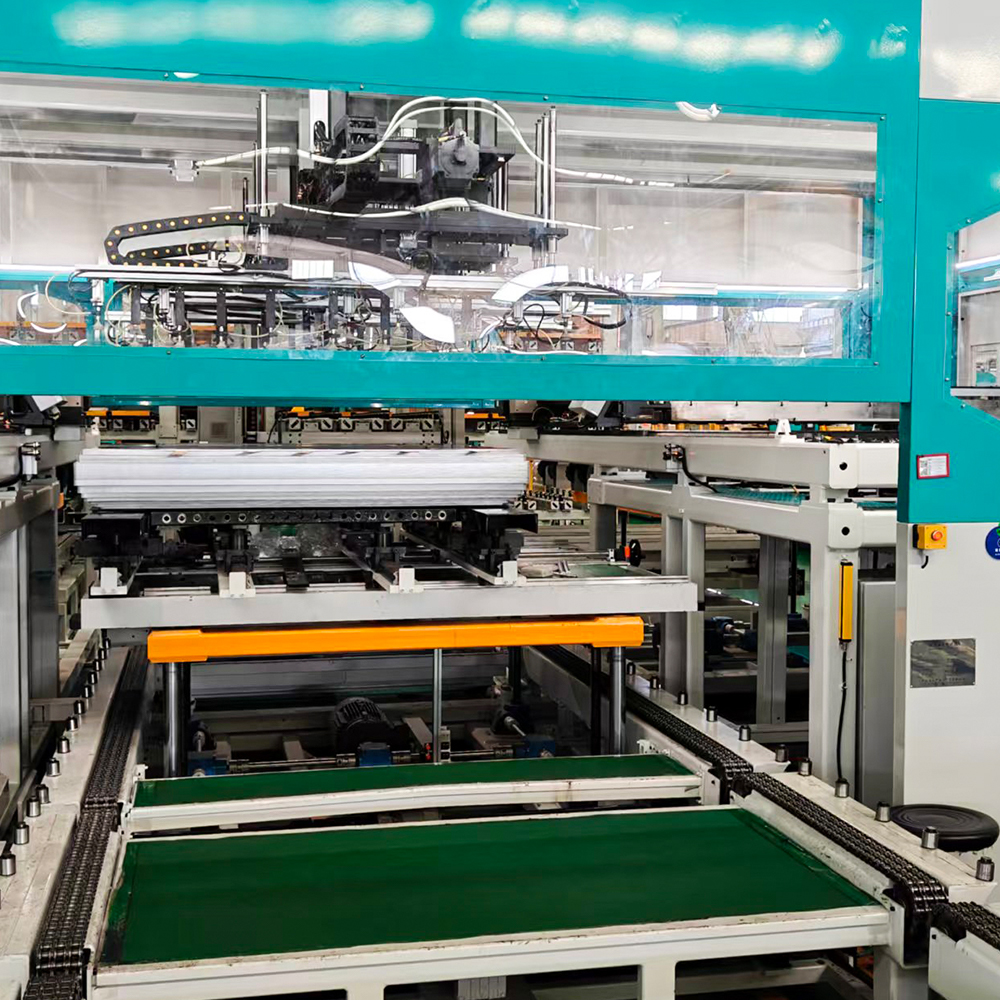 LXD-260-2 Offline Transformer Core Stacking LineThis offline column-type stacking equipment uses vacuum suction and moving mechanisms to assemble cores from sheared silicon steel sheets, addressing quality issues from manual stacking. It offers automation without requiring full in-line integration, suitable for flexible production.View Product →
Throughput Comparison: Where Inline Gains Its Advantage
Throughput is the first metric that separates the two configurations. The following table summarizes typical performance indicators for offline and automatic in-line core stacking lines under steady production conditions. Actual values depend on core size, lamination thickness, and the level of upstream automation.
| Metric | Offline Stacking Line | Automatic In-Line Line |
|---|---|---|
| Cycle time per core | Moderate; limited by manual handling | Short; limited by machine cycle only |
| Operators per shift | 3 to 5 | 1 to 2 |
| Changeover time between core sizes | Short; quick reconfiguration | Longer; requires coordinated adjustment |
| Maximum cores per shift | Baseline output | Approximately 20% to 40% higher |
| In-process inventory | Higher; buffers between stations | Lower; continuous flow |
| Scrap and rework rate | Higher; dependent on operator skill | Lower; consistent machine precision |
Cycle Time and Equipment Utilization
An automatic in-line line keeps equipment utilization high by removing the manual wait states that separate operations. Table feeders, alignment fixtures, and conveying systems run continuously at a controlled speed. For a plant producing the same core type in high volume, the utilization gain translates directly into more output per square meter of floor space.
Changeover Flexibility and Product Mix
Offline lines remain attractive when changeovers are frequent. Each workstation can be reconfigured independently, so switching from a small distribution transformer core to a larger power transformer core does not require stopping the whole system. An in-line line requires coordinated adjustment of the shearing station, transfer mechanism, and stacking tooling, which reduces effective output when batch sizes are small.
ROI Analysis: Calculating the Real Return
The financial comparison involves far more than the purchase price. A complete ROI model must account for equipment cost, installation, floor space, labor, energy, maintenance, scrap, and the opportunity cost of output lost during commissioning.
Initial Capital Expenditure
Offline lines generally have a lower purchase price per unit and require less complex integration. The LXD4201 offline stacking production line and the LXD2602 cover two investment tiers within the offline category, giving plants the option to start smaller and add stations later.
An automatic in-line line such as the ZXD440 carries a higher upfront cost because it combines shearing, conveying, stacking, and control systems into one synchronized machine. The extra investment pays off only when the line is loaded with sufficient volume.
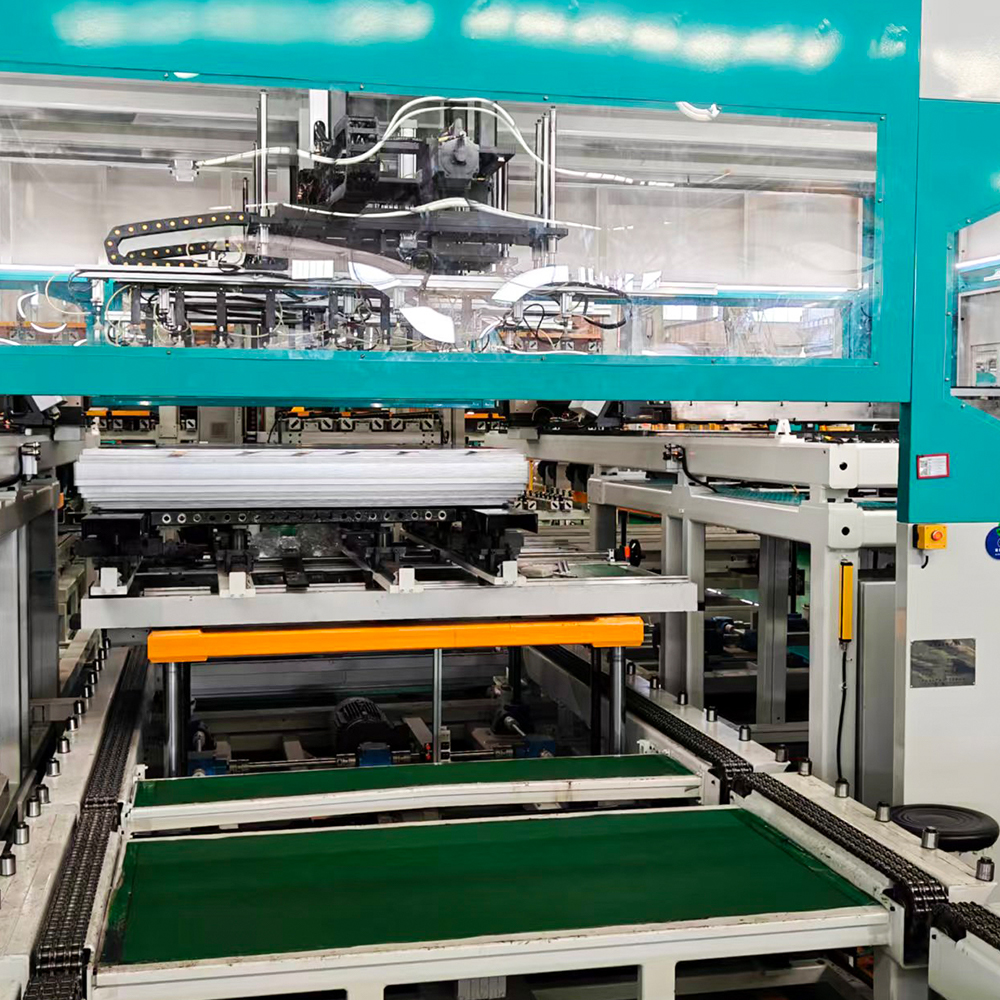 LXD-420-1 Offline Transformer Core Stacking Production LineThis offline automatic stacking system conveys columns from a storage mechanism and utilizes vacuum suction for positioning and stacking, reducing manual handling and core loss. It helps lower labor requirements compared to traditional manual stacking, fitting operations with moderate volumes.View Product →
Operating Costs: Labor, Floor Space, and Scrap
Labor is the largest variable cost difference. An offline line typically requires three to five operators per shift for feeding, stacking, quality checking, and transport. An automatic in-line line may run with one or two operators who monitor the control system and handle occasional jams. Over a three-year period, labor savings often exceed the price premium of the in-line machine.
Floor space is a second factor. Offline stations are spread out, with buffer racks and transfer carts occupying valuable shop floor. In-line machines are compact and linear, freeing space for annealing, finishing, or staging of completed cores.
Payback Period Scenarios
The following table illustrates a simplified payback comparison for a mid-size transformer core workshop operating two shifts per day. The figures are directional examples rather than quotes; a precise calculation requires site-specific data.
| Cost Item | Offline Line | Automatic In-Line Line |
|---|---|---|
| Equipment investment | Lower baseline | Higher by 30% to 50% |
| Annual labor cost | Higher for 4 operators | Lower for fewer operators |
| Annual scrap cost | Higher | Lower |
| Energy and maintenance | Moderate | Slightly higher but stable |
| Estimated payback period | Baseline recovery path | 2 to 3 years at high utilization |
Which Configuration Fits Your Production Environment?
There is no universally superior architecture. The right choice depends on your order structure, labor costs, and growth trajectory.
Choose an Automatic In-Line Line When
- Your order book is dominated by large batches of standardized core sizes;
- Labor costs are high or skilled stacking operators are difficult to recruit;
- You need consistent stacking precision and traceability for quality-critical cores;
- Floor space is constrained and in-process inventory must be minimized;
- You are building a new workshop and can design the process flow around the machine.
Choose an Offline Line When
- Core sizes change frequently and batch sizes are small;
- You prefer to phase your investment and begin with lower capital outlay;
- Your existing workshop layout cannot be easily rearranged;
- Manual inspection and rework are part of your quality process;
- You need to maintain output when one workstation is down for service.
Integration with Silicon Steel Shearing and Core Production
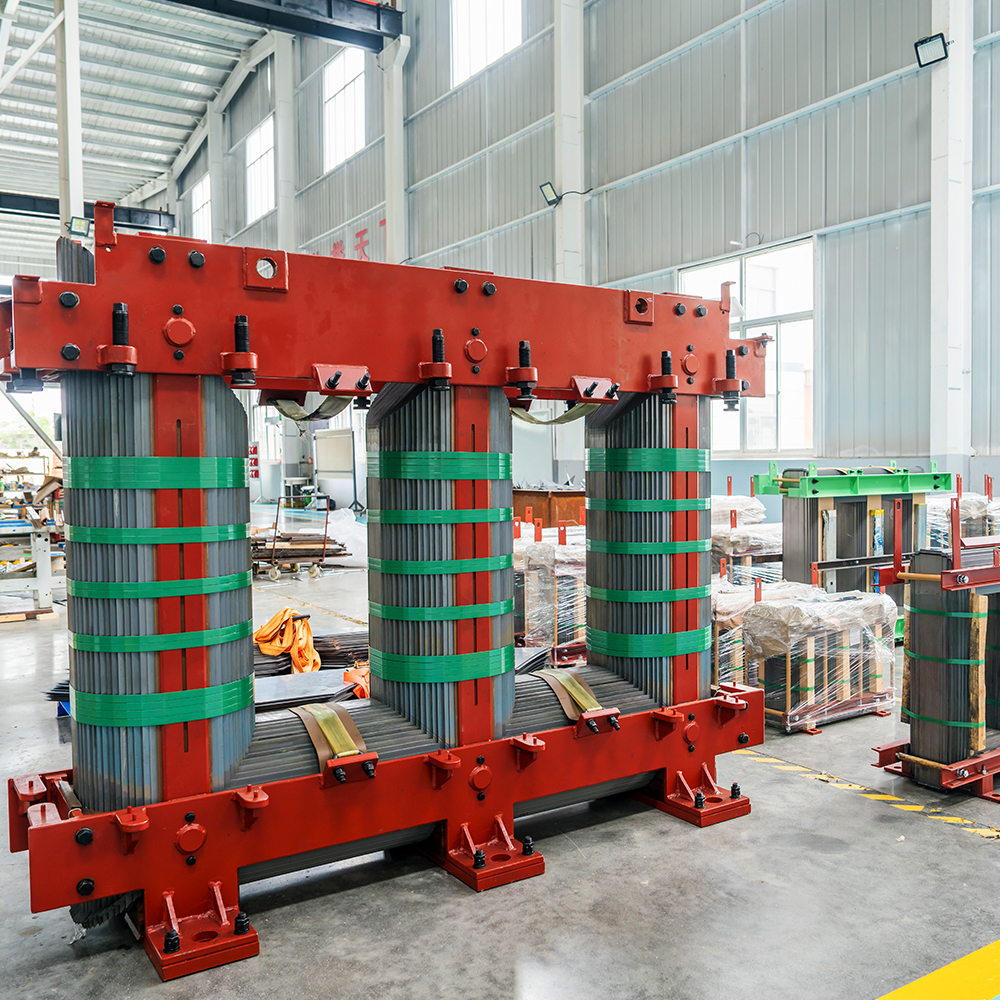
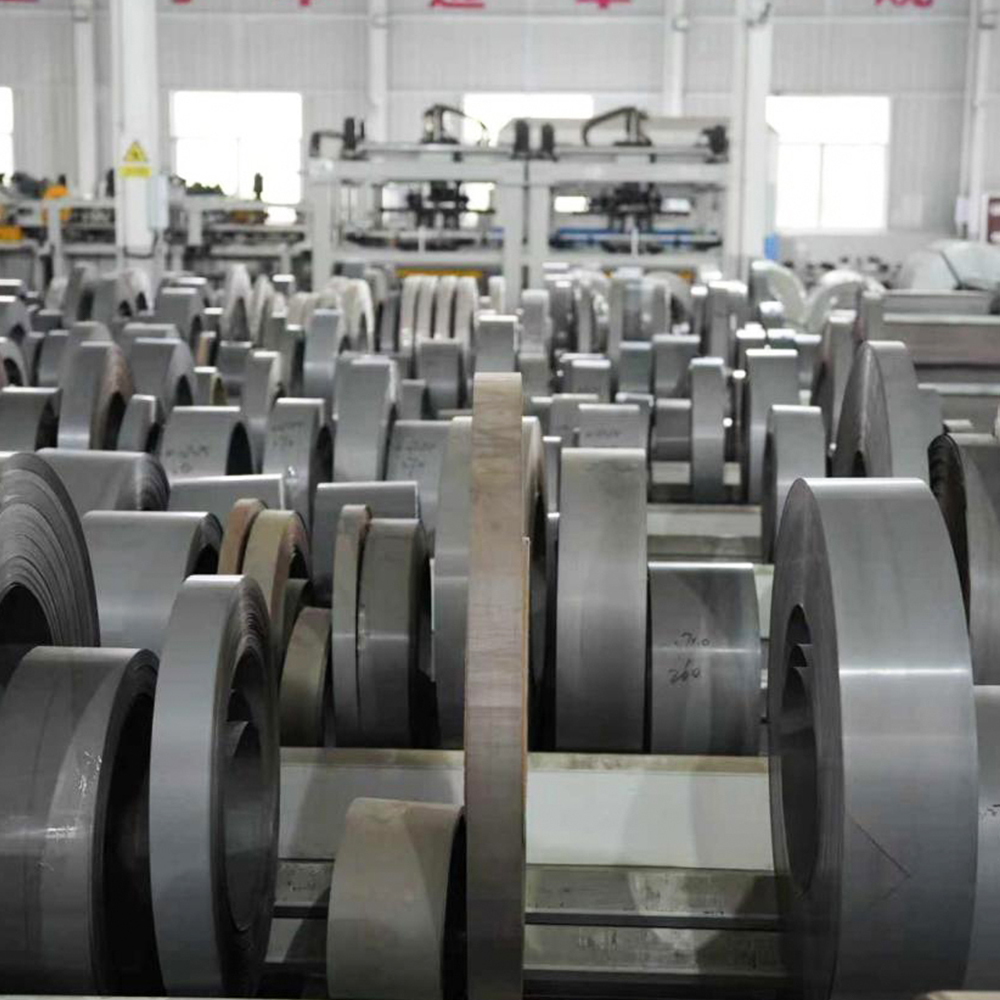
Both offline and in-line stacking lines perform best when paired with a reliable upstream silicon steel shearing process. A cut-to-length line such as the HJDZ300 or HJDZ440 supplies precisely dimensioned laminations that keep stacking tolerances under control. In an automatic in-line configuration, the shearing and stacking systems can be synchronized so that lamination output feeds directly into the stacking station, eliminating intermediate bundle handling entirely.
The choice between offline and in-line stacking also affects downstream operations. In-line lines produce a steadier output of finished cores, which simplifies the scheduling of annealing, coating, and final assembly. Offline lines offer more scheduling freedom through buffer inventories, but require additional work-in-progress tracking and management effort.
To understand how the equipment and core product portfolio fit together in a complete manufacturing chain, the company overview provides additional context on the full range of solutions.
Frequently Asked Questions
Q1: What is the typical payback period for an automatic in-line core stacking line?
At high utilization, most plants recover the additional investment within two to three years through labor savings, reduced scrap, and higher output. The exact period depends on shift count, labor rates, and the value of the additional throughput.
Q2: Can an offline core stacking line be upgraded to automatic in-line operation later?
Partial upgrades are possible in many cases. Workstations can be automated individually, and conveyors can be added to connect stations. However, a full in-line conversion usually requires replacing the control architecture and adding synchronized feeding mechanisms, which in some situations approaches the cost of a new machine.
Q3: How does batch size affect the throughput comparison?
For large batches, the in-line line runs continuously and achieves its highest utilization advantage. For small batches, changeover time dilutes that advantage, and an offline line can match or exceed effective throughput because each station is set up independently.
Q4: Is the ZXD440 automatic inline line suitable for both small and large transformer cores?
The ZXD440 is designed for a defined range of core sizes. It performs best when the production plan groups similar core dimensions into longer runs. Very small cores with tight tolerances may require additional tooling, while very large power transformer cores often remain in the offline domain because of their size and handling requirements.
Conclusion: Align the Investment with Your Throughput Reality
The comparison between offline and automatic in-line core stacking production lines comes down to a trade-off between flexibility and continuous flow. Offline lines reduce risk and handle product variety gracefully; automatic in-line lines deliver higher throughput, lower labor dependency, and a stronger ROI when volume is stable and repeatable.
Evaluate your order pipeline, labor availability, floor space, and quality requirements before committing. A clear picture of your utilization rate is the single most important input for the ROI calculation. For a site-specific throughput or investment evaluation, discuss your core portfolio with a specialist at Jingtianxia and request a line configuration matched to your production plan.

-
Mobile
+86-18351152766
-
E-mail
479279940@qq.com
-
Address
No.3 Park, Jiangcun Village, Liangxu Town, Jiangyan District, Taizhou City, Jiangsu Province, China


Copyright © Jiangsu Jingtianxia Electric Technology Co., Ltd. Rights Reserved.Specializing In Transformer Core Manufacturing
