 English
 Español
 عربى
 Türk



Why Carbide Shearing Blades Are Essential for High-Silicon GO Steel Processing
Content
- 1 Understanding High-Silicon Grain-Oriented Steel
- 2 Why Standard Blades Struggle with Silicon Steel
- 3 The Core Advantages of Carbide Shearing Blades
- 4 How Cutting Quality Affects Transformer Core Performance
- 5 Carbide Blades in Modern Silicon Steel Cut-to-Length Lines
- 6 Selecting the Right Carbide Grade and Geometry
- 7 Maximizing Blade Life Through Maintenance
- 8 Frequently Asked Questions
Grain-oriented electrical steel is the backbone of transformer core manufacturing, and no grade is more demanding than high-silicon grain-oriented steel. Its superior magnetic properties come at a price: the same silicon content that reduces core losses makes the material abrasive, hard, and difficult to shear. Carbide shearing blades have become the industry standard for precisely this reason. They provide the wear resistance, edge stability, and cutting accuracy that high-silicon grain-oriented steel demands, protecting both product quality and production economics.
Understanding High-Silicon Grain-Oriented Steel
High-silicon grain-oriented steel, also known as grain-oriented electrical steel, typically contains 2.9% to 3.5% silicon by weight. The addition of silicon increases electrical resistivity, which significantly reduces eddy current losses in transformer cores. A controlled rolling and annealing process produces a Goss texture, aligning crystal grains in the rolling direction to optimize magnetic flux conduction.
Transformer manufacturers rely on this material to build cores that minimize no-load losses and operate reliably at high flux densities. It is widely used in power transformers, distribution transformers, and large generator stators, where magnetic efficiency translates directly into operational savings. However, the same metallurgical features that make this steel magnetically efficient also create serious challenges for cutting tools.
The trade-off: Higher silicon content improves magnetic performance but increases hardness and brittleness, making the steel significantly harder to shear than conventional low-carbon steel.
Why Standard Blades Struggle with Silicon Steel
Conventional shearing blades, typically made from high-speed steel or tool steel, wear rapidly when processing high-silicon grain-oriented steel. Three factors accelerate blade degradation:
- Abrasive oxide coating: The insulation coating applied to the steel surface is highly abrasive and acts like sandpaper on the blade edge.
- Work hardening: The shearing process itself hardens the cut zone, making subsequent cuts progressively more difficult.
- High material hardness: With hardness values well above ordinary carbon steel, silicon steel causes faster edge rounding and micro-chipping.
As the blade dulls, it cannot cleanly fracture the material. Instead, it stretches and then tears the sheet, creating pronounced burrs along the cut edge. This is where carbide shearing blades change the economics and quality of the entire process.
| Performance Factor | High-Speed Steel Blade | Carbide Shearing Blade |
|---|---|---|
| Hardness | 63 to 67 HRC | 85 to 94 HRA |
| Wear resistance | Moderate | Excellent |
| Edge stability | Fair | Superior |
| Regrinding interval | Short | 3 to 5 times longer |
| Burr control | Degrades quickly | Consistent |
The Core Advantages of Carbide Shearing Blades
Tungsten carbide blades combine extreme hardness with sufficient toughness to endure high-impact shearing forces. The cemented carbide matrix delivers several specific benefits for high-silicon grain-oriented steel processing:
- Extended service life between regrinds
- Consistent edge geometry across long production runs
- Clean fracture with minimal burr and micro-cracks
- Higher shearing speeds without excessive heat generation
Unlike tool steel, which softens at elevated temperatures, carbide retains its hardness under demanding thermal and mechanical loads. Although the initial procurement cost of a carbide blade exceeds that of a high-speed steel blade, the cost per cut is significantly lower. Fewer blade changes mean less downtime, less scrap, and lower labor cost for tool replacement.
How Cutting Quality Affects Transformer Core Performance
Burr height and edge quality directly determine whether a transformer core will meet its magnetic loss targets. Excessive burrs create electrical contact between adjacent laminations, allowing interlaminar currents to flow and increasing eddy current losses. Carbide blades produce a clean, square shear face, keeping burr heights below acceptable thresholds and preserving the insulation between laminations.
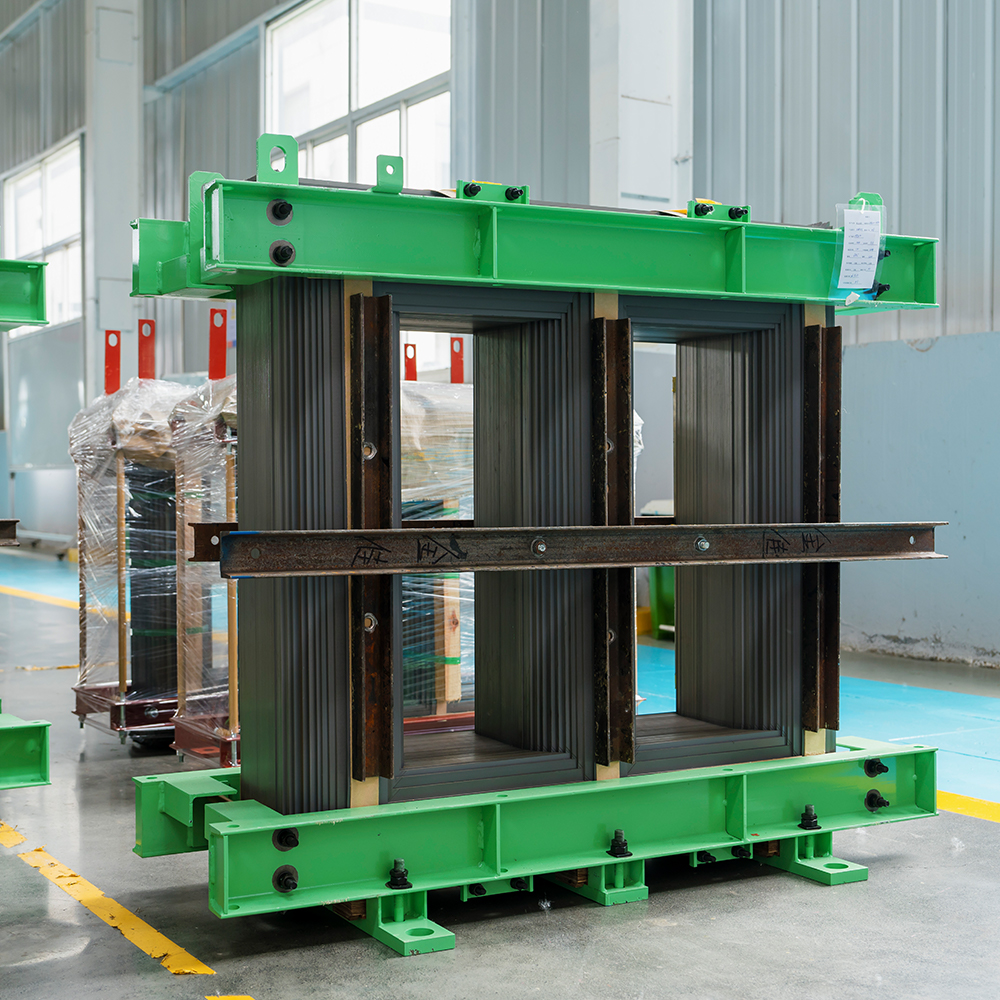
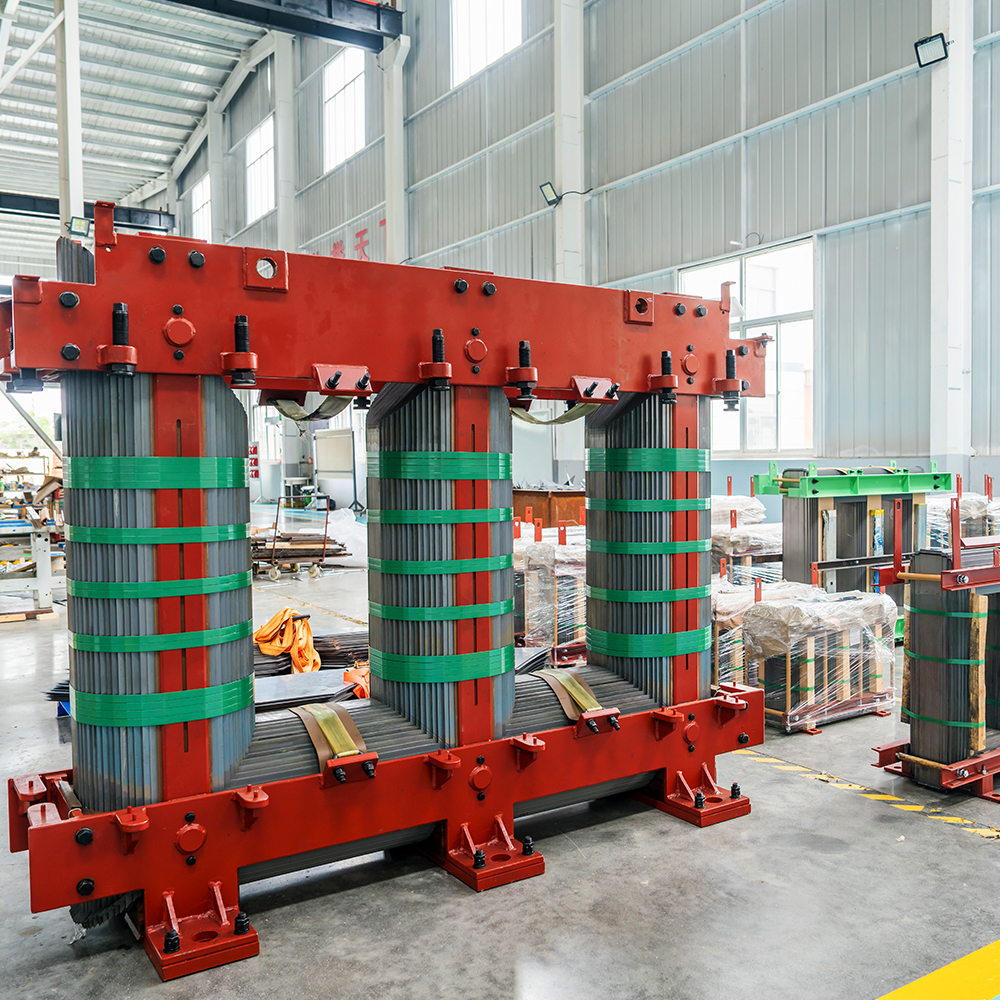
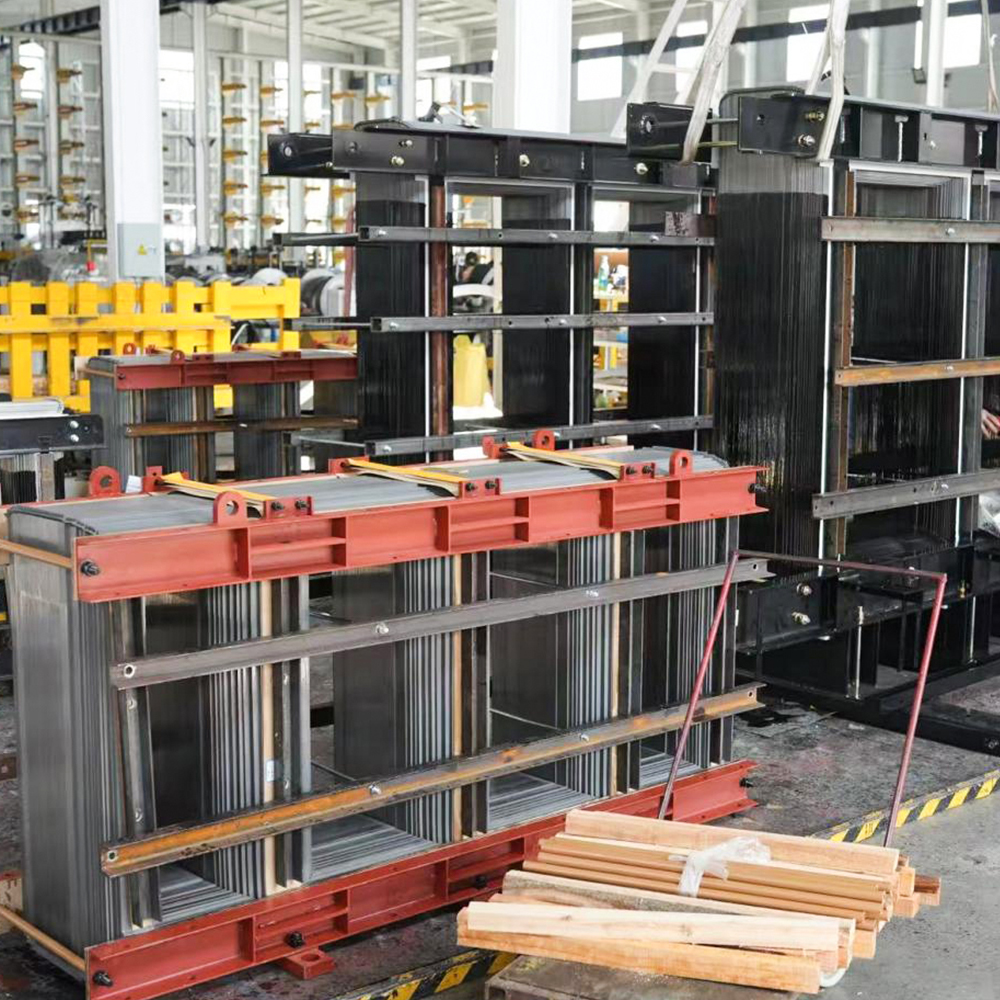
Precision-cut sheets also improve the stacking factor. Smooth, flat edges let laminations sit tightly together, increasing the effective cross-sectional area of the core and reducing the number of sheets required to reach a target flux cross-section.
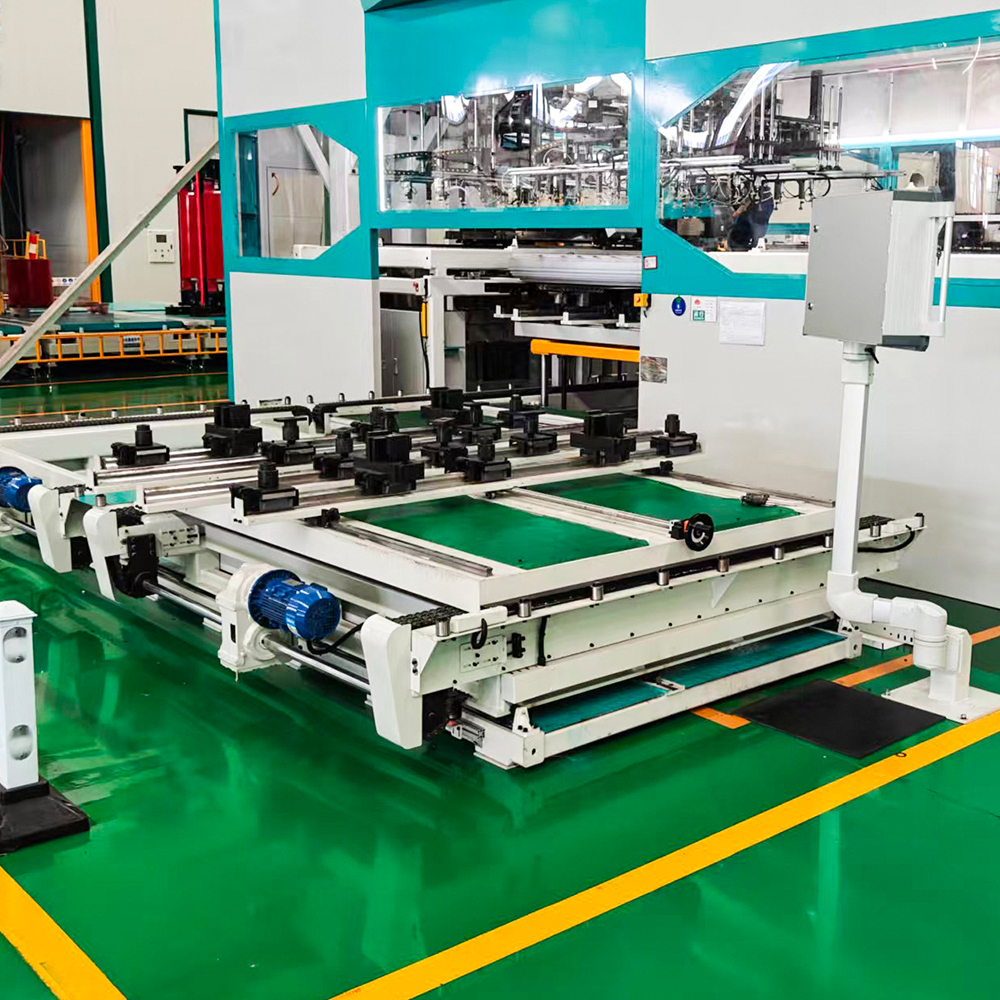
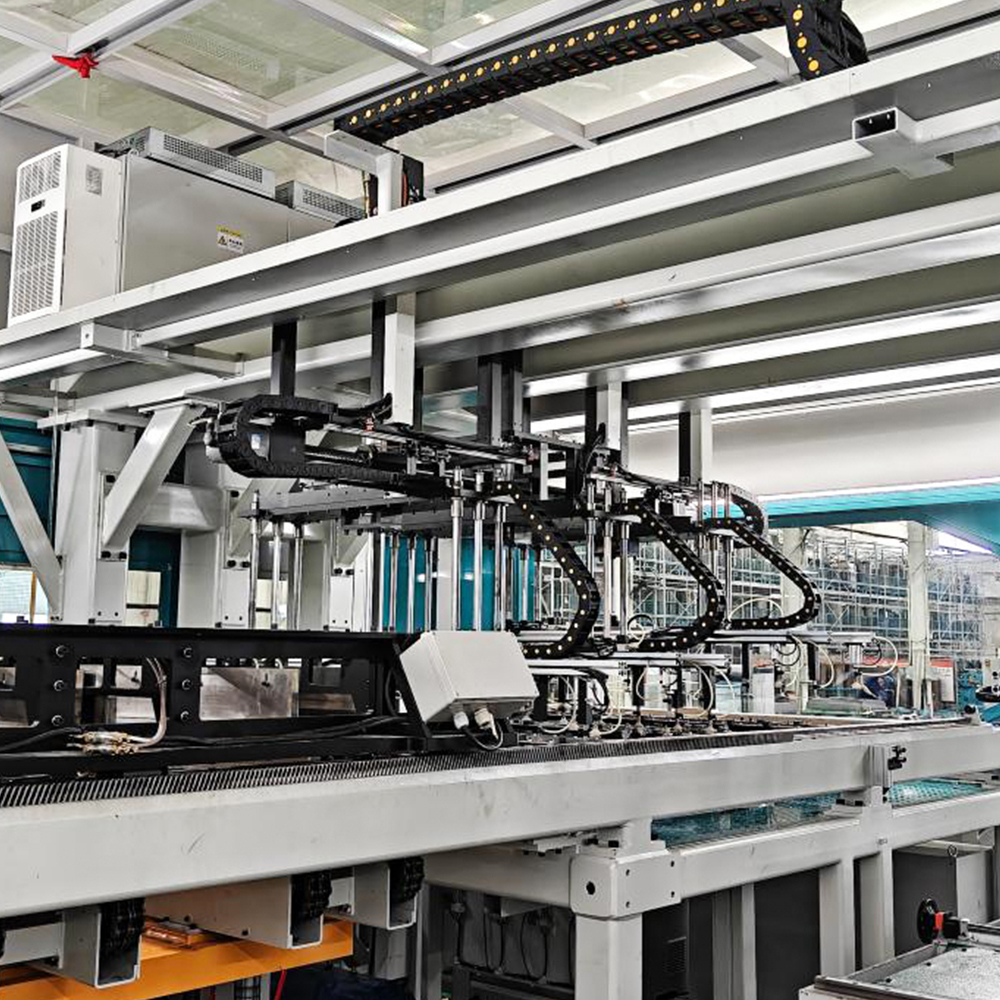 ZXD-440 Automatic In-line Transformer Core Stacking Production LineThis line connects directly to the transverse shearing line, enabling simultaneous shearing and stacking without manual handling. It ensures consistent dimensional accuracy across laminations, which is critical for downstream automatic stacking operations.View Product →
Downstream equipment, such as automatic core stacking lines, depends on the dimensional consistency of incoming sheets. A blade that drifts by even a few microns creates progressive stacking errors that multiply across thousands of laminations.
Carbide Blades in Modern Silicon Steel Cut-to-Length Lines
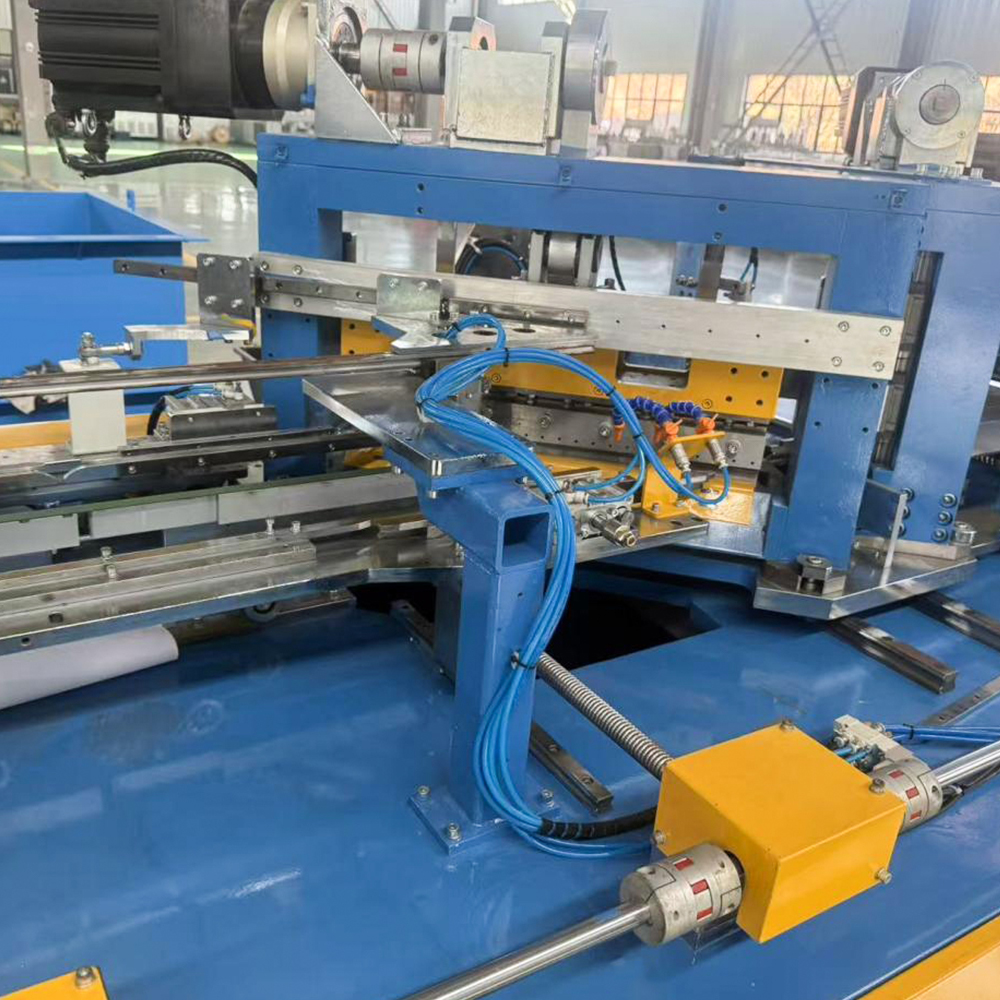
Contemporary silicon steel processing relies on high-speed cut-to-length lines that integrate uncoiling, leveling, shearing, and stacking in one continuous flow. These lines run at high throughput, and any blade change forces downtime. Carbide shearing blades reduce maintenance stops and keep precision stable, making them essential for automated production environments.
Manufacturers such as Jiangsu Jingtianxia Electric Technology, a provider of silicon steel cut-to-length lines, design their shearing stations around the capabilities of carbide tooling. The HJDZ440 silicon steel cut-to-length line, for example, is engineered to maintain tight dimensional tolerances over long batches, precisely the operating condition where carbide blades excel.
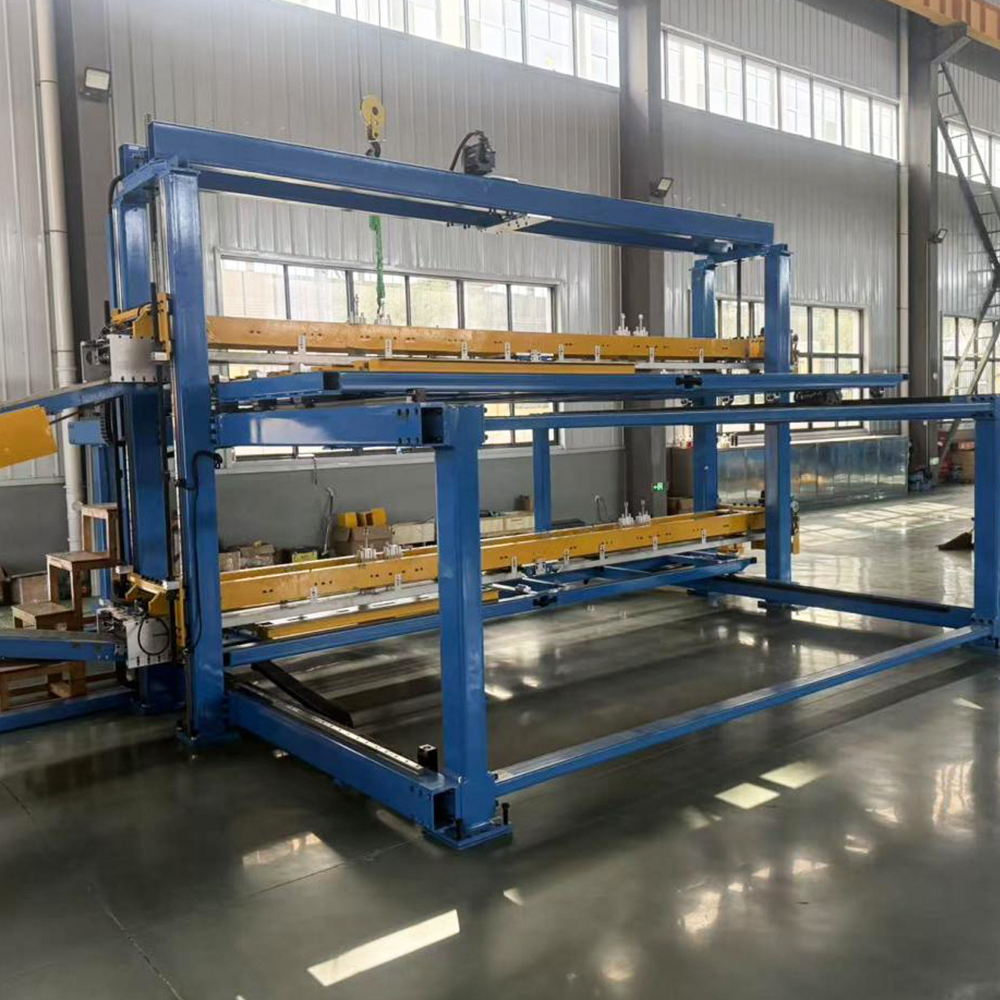 HJ-DZ-440 Silicon Steel Cut-to-Length LineHigh-precision shearing line with Siemens servo control and carbide tooling, achieving ±0.2 mm cutting accuracy. It supports both offline and in-line stacking, making it suitable for long-batch production where edge quality and repeatability are essential.View Product →
For operations with narrower strip widths or lighter gauge ranges, the HJDZ300 silicon steel shearing line offers the same emphasis on edge quality and repeatability, again relying on carbide shearing blades to deliver consistent results.
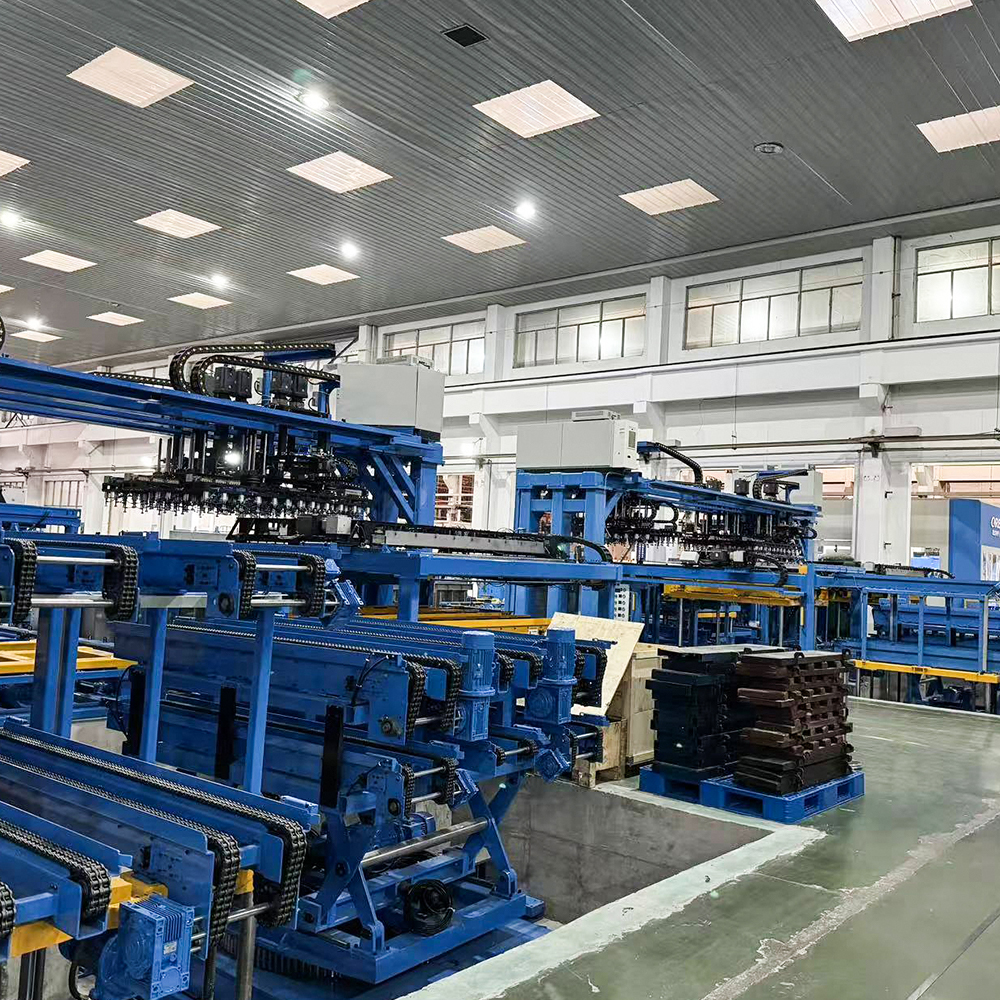 HJ-DZ-300 Silicon Steel Shearing LineCompact shearing line designed for small and medium transformer manufacturers, processing widths up to 300 mm. It offers same precision as larger models, with servo-driven accuracy and low noise, ideal for multi-variety, small-batch production.View Product →
Selecting the Right Carbide Grade and Geometry
Not all carbide blades perform identically. The effective processing of high-silicon grain-oriented steel depends on matching the grade and geometry to the specific line parameters.
Carbide grade
Higher cobalt content increases toughness but reduces hardness; lower cobalt content improves wear resistance but increases brittleness. Most silicon steel shearing applications use grades with cobalt content between 6% and 15%, balancing impact resistance with edge life.
Blade geometry
- Rake and clearance angles control the stress distribution during shearing.
- A stable cutting edge with a controlled hone radius prevents chipping on the first contact.
- Sufficient back clearance reduces friction between the blade and the stripped sheet.
Maximizing Blade Life Through Maintenance
Regular inspection and timely regrinding keep carbide shearing blades in optimal condition. Blades should be reground before edge breakdown becomes visible, because hidden micro-chipping accelerates further damage. Precision grinding equipment and qualified operators are essential to recreate the original cutting geometry without introducing grinding burns.
Lubrication and clamping torque also influence blade stability, so operators should follow the machine manufacturer's specifications for each shearing line. Keeping a spare blade set ready reduces emergency downtime and makes scheduled regrinding a routine part of production planning.
Frequently Asked Questions
Q1: How often should carbide shearing blades be reground?
The regrinding interval depends on material grade, strip thickness, shearing speed, and blade quality. For high-silicon grain-oriented steel under normal production conditions, carbide blades typically last three to five times longer than high-speed steel blades, with intervals commonly ranging from several weeks to months of continuous operation.
Q2: Can carbide blades handle all silicon steel grades?
Yes, with proper grade selection and edge geometry, carbide blades can shear grain-oriented, high-silicon, and even semi-processed electrical steels. However, the optimal carbide grade may vary with the specific material hardness and coating type.
Q3: Why do burrs appear even with carbide blades?
Burr formation can occur when blade clearance is incorrect, the blade guard is worn, or the sheet support is misaligned. Carbide blades reduce burr frequency but cannot compensate for mechanical misalignment in the shearing machine. Routine maintenance of the entire shearing station remains vital.
High-silicon grain-oriented steel processing leaves no room for compromise. The material's outstanding magnetic performance places extraordinary demands on cutting tools, and only carbide shearing blades consistently deliver the edge stability, wear resistance, and burr-free cutting required by modern transformer core manufacturing. The evolution of upgraded intelligent processing equipment continues to reinforce this precision-first approach, and for manufacturers exploring automated core production, the choice of blade material is not a minor consumable decision but a strategic factor that determines core quality, production uptime, and long-term operating cost.
-
Mobile
+86-18351152766
-
E-mail
479279940@qq.com
-
Address
No.3 Park, Jiangcun Village, Liangxu Town, Jiangyan District, Taizhou City, Jiangsu Province, China


Copyright © Jiangsu Jingtianxia Electric Technology Co., Ltd. Rights Reserved.Specializing In Transformer Core Manufacturing
