 English
 Español
 عربى
 Türk



How the ZXD-440 In-Line Stacking Line Eliminates Human Error in Transformer Cores
Content
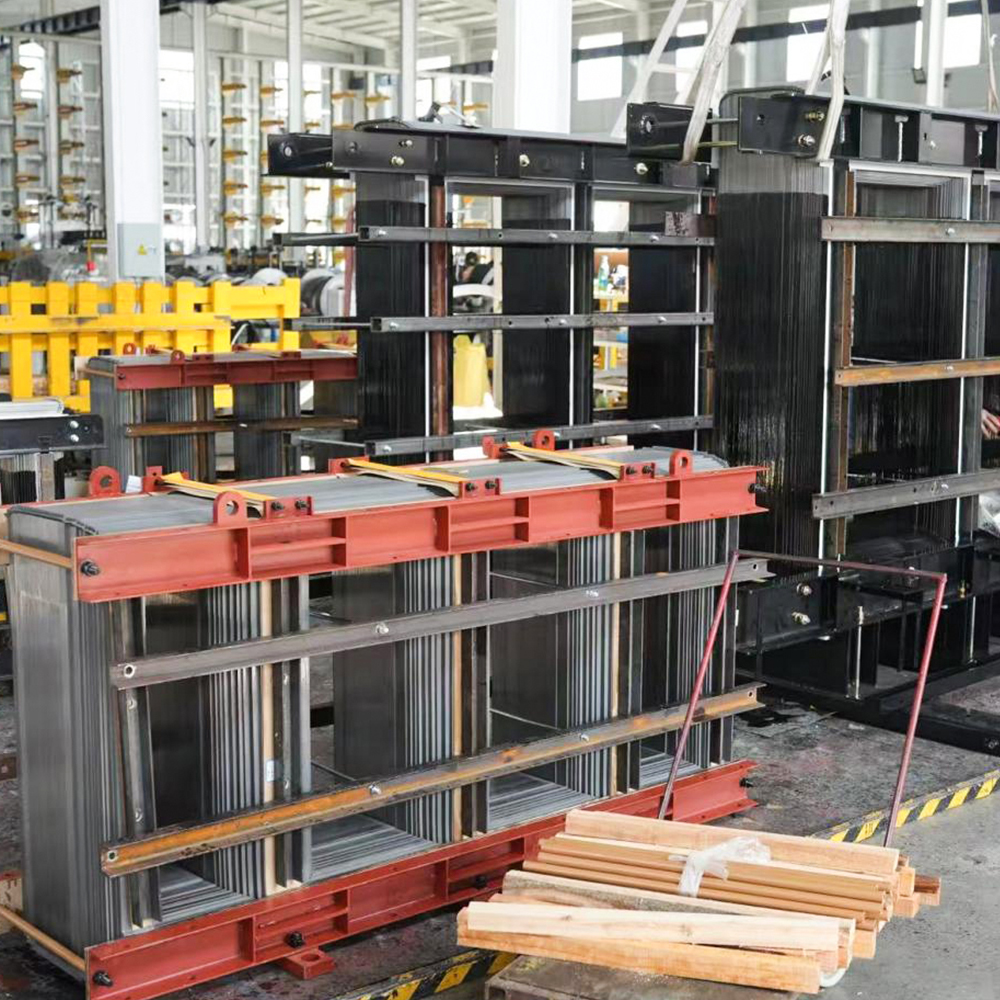
Large power transformer cores are built from thousands of thin silicon steel laminations. Each lamination must be cut, positioned, and assembled to exacting tolerances, because a deviation that looks insignificant on a single sheet compounds rapidly across the full stack. In conventional workshops, core stacking has depended on the hands and eyes of skilled operators. Yet no matter how experienced the team, manual handling introduces measurable variation into alignment, joint position, and material condition.
The ZXD-440 automatic in-line transformer core stacking production line was designed to eliminate exactly these variations. Rather than simply making the operator faster, it removes the operator from the points where precision matters most. This article explains where human error enters the stacking process, how the ZXD-440 counteracts each failure mode, and what that means for manufacturers of large power transformer cores.
Where Human Error Creeps into Core Stacking
Stacking transformer core laminations is not simply a matter of piling steel sheets. The insulation coating must remain intact, the butt gaps and step-lap joints must follow a precise sequence, and the final core dimensions must hold within tight tolerances. In a large power transformer core, the practical consequences of stacking errors are serious.
- Increased core losses: Misaligned laminations raise eddy current losses and create localized hot spots that reduce transformer efficiency.
- Mechanical damage: Handling can scratch or abrade the insulation coating, which short-circuits adjacent laminations and degrades magnetic performance.
- Dimensional deviation: A small misalignment on one sheet multiplies across thousands of layers and can push finished cores out of specification.
- Noise and vibration: Irregular stacking alters the magnetic circuit and increases audible noise and mechanical vibration during operation.
For manufacturers of large power transformers, these errors are not merely cosmetic. A core that fails electrical testing at the end of the production line requires extensive rework, or in severe cases, complete replacement. Scrap costs, rework labor, and delayed deliveries all flow directly from stacking mistakes that could have been prevented at the source.
The goal is not to find defects after the core is assembled, but to make defects impossible during assembly.
How the ZXD-440 Removes Operator-Dependent Variability
The ZXD-440 automatic in-line stacking line replaces manual judgment at every critical step. Its engineering approach can be summarized in four capabilities.
1. Automated Feeding and Positioning
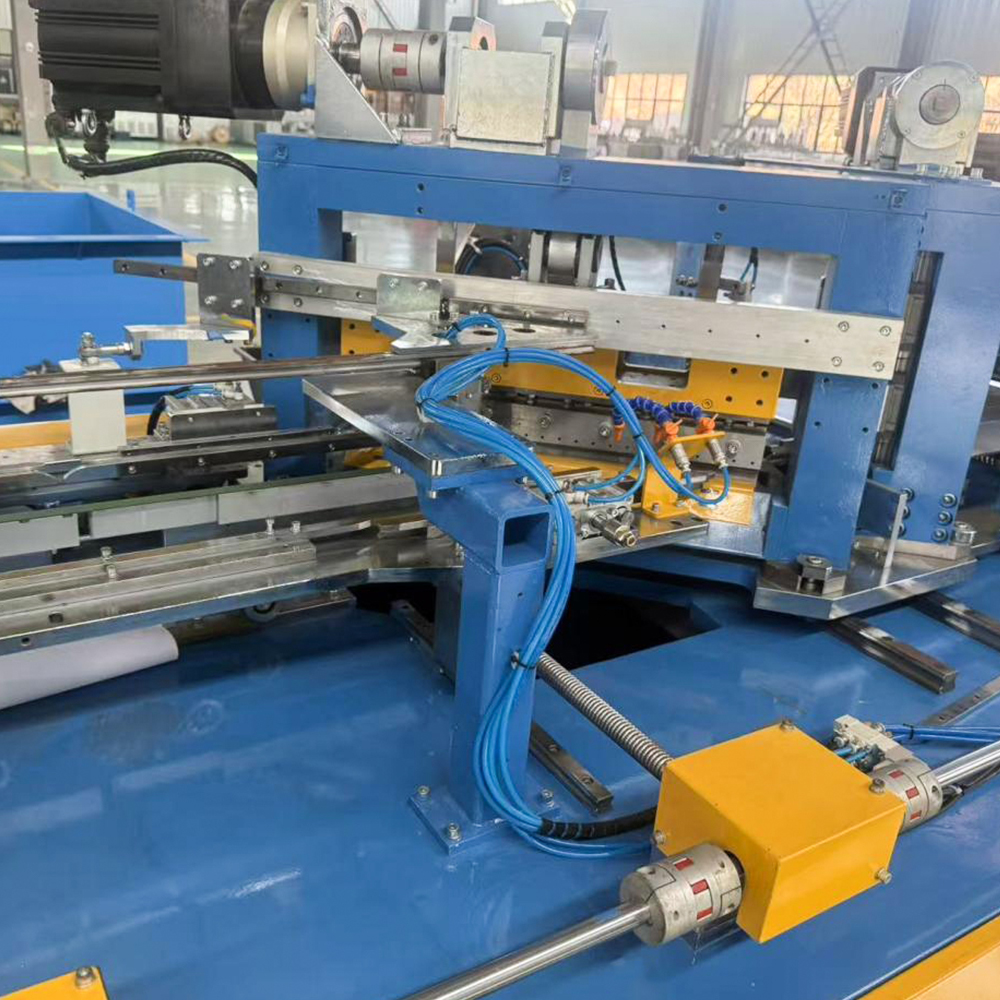
Laminations enter the ZXD-440 from the upstream cutting line and are aligned by servo-driven guides rather than by hand. Each sheet is placed into the stack at a controlled position, so the operator's depth perception and attention no longer determine alignment accuracy. The result is repeatable placement from the first lamination to the last.
2. Real-Time Inspection with Automatic Rejection
The line integrates a lamination inspection stage that checks each sheet for dimensional deviation, edge defects, and surface damage before it can enter the stack. Any lamination that fails the inspection is automatically rejected into a separate bin, preventing defective material from contaminating the core. This continuous in-process inspection replaces the visual spot-checks that manual operations depend on.
3. Enforced Step-Lap Geometry
Step-lap stacking is one of the most effective ways to reduce magnetic losses in transformer cores, but only when every joint follows the same pattern. The ZXD-440 mechanically enforces the stacking sequence, so the lap positions and gap dimensions are consistent from one layer to the next. Variability caused by operator fatigue, distraction, or habit is completely removed.
4. Production Data and Traceability
Because the entire process is automated, the ZXD-440 can record stacking parameters, inspection outcomes, and production counts without paperwork. This data gives quality engineers visibility into every batch and creates an audit trail that manual processes cannot provide. When a manufacturer needs to prove process control to a utility customer, this record is increasingly important.
Automation does not merely reduce human error; it eliminates the conditions under which human error occurs.
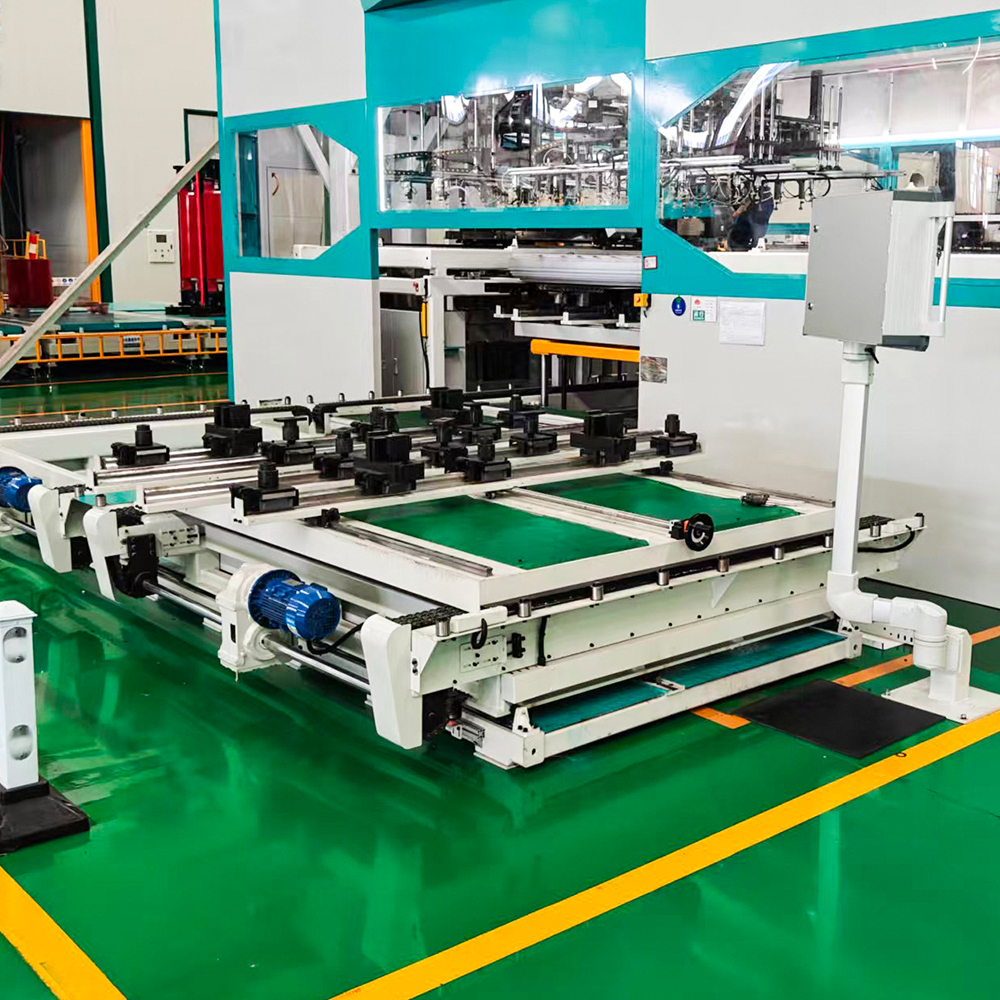
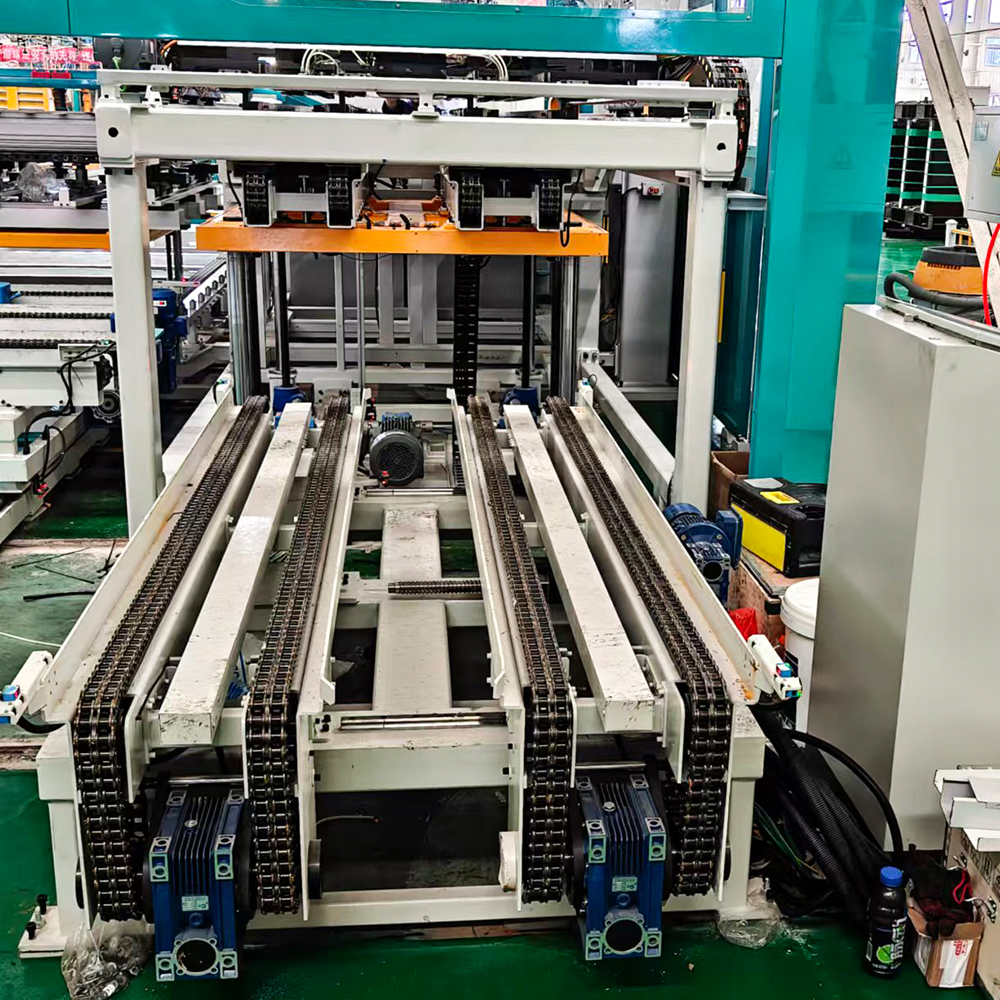
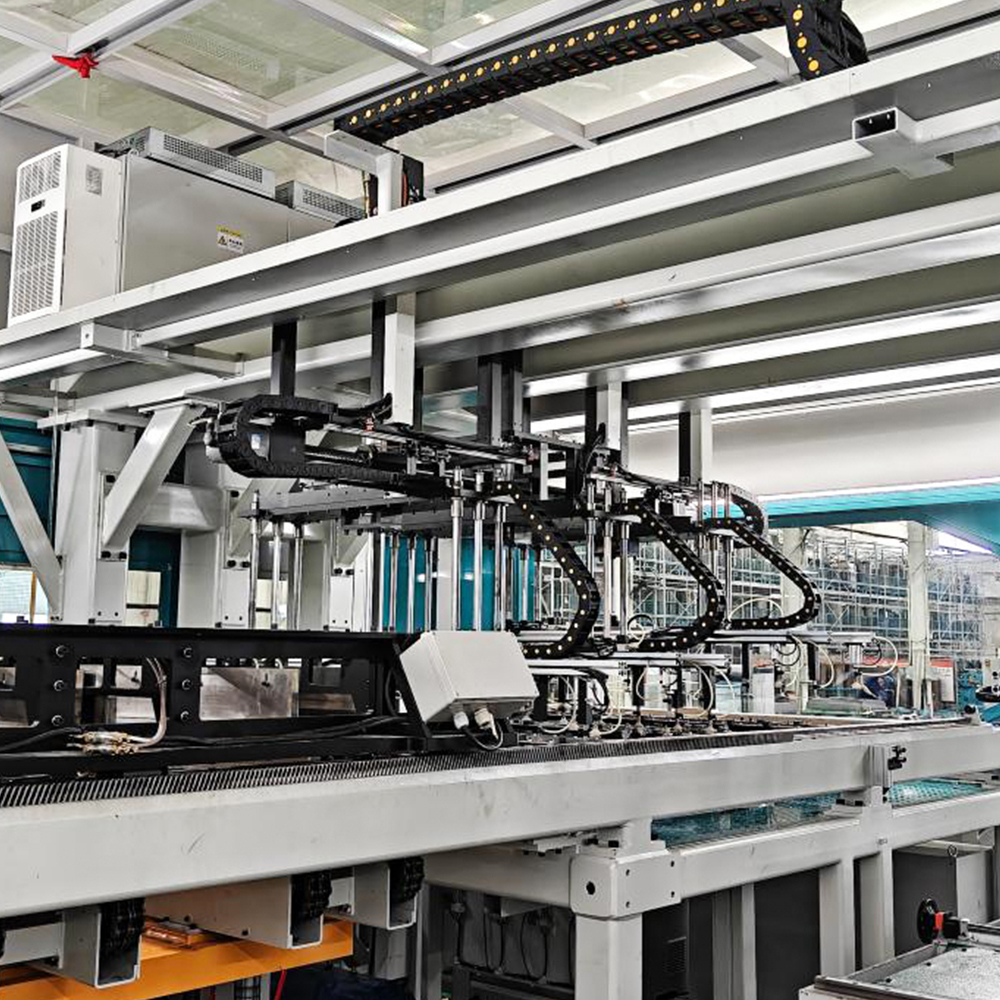 ZXD-440 Automatic In-line Transformer Core Stacking LineThis in-line system connects directly to the cut-to-length line, stacking laminations immediately after cutting. It eliminates intermediate buffering and manual handling, while automatically recording stacking parameters and inspection data for better process traceability.View Product →
In-Line vs. Offline Stacking: Why Integration Matters
Offline stacking systems are valuable when cores are produced in separate work cells, with laminations transported between machines. But every transfer between cutting, storage, and stacking introduces handling points where sheets can be damaged or mixed. The ZXD-440 is designed to be positioned directly behind the cut-to-length line, receiving laminations immediately after cutting and stacking them without intermediate buffering.
| Feature | Manual Stacking | Offline Automated Line | ZXD-440 In-Line |
|---|---|---|---|
| Lamination feeding | Hand-fed sheet by sheet | Semi-automatic loading | Direct from cut-to-length line |
| Alignment accuracy | Operator dependent | Fixed mechanical guides | Servo-driven precision positioning |
| Inspection | Visual spot check | Periodic manual check | Every lamination, in real time |
| Defective lamination handling | Manual removal | Semi-automatic separation | Automatic rejection to a separate bin |
| Data recording | Paper records | Local records | Integrated traceability |
The comparison makes an important point visible: in-line operation is not just a matter of layout convenience. When cutting, inspection, and stacking are connected in one automated flow, the number of operators involved in material handling is reduced, and the number of opportunities for handling damage drops with it.
Manufacturers evaluating both approaches can compare the full range of core stacking and assembly lines to see which configuration matches their factory. For those that need a standalone work cell, the LXD4201 offline transformer core stacking production line offers the same precision controls in a batch-oriented layout.
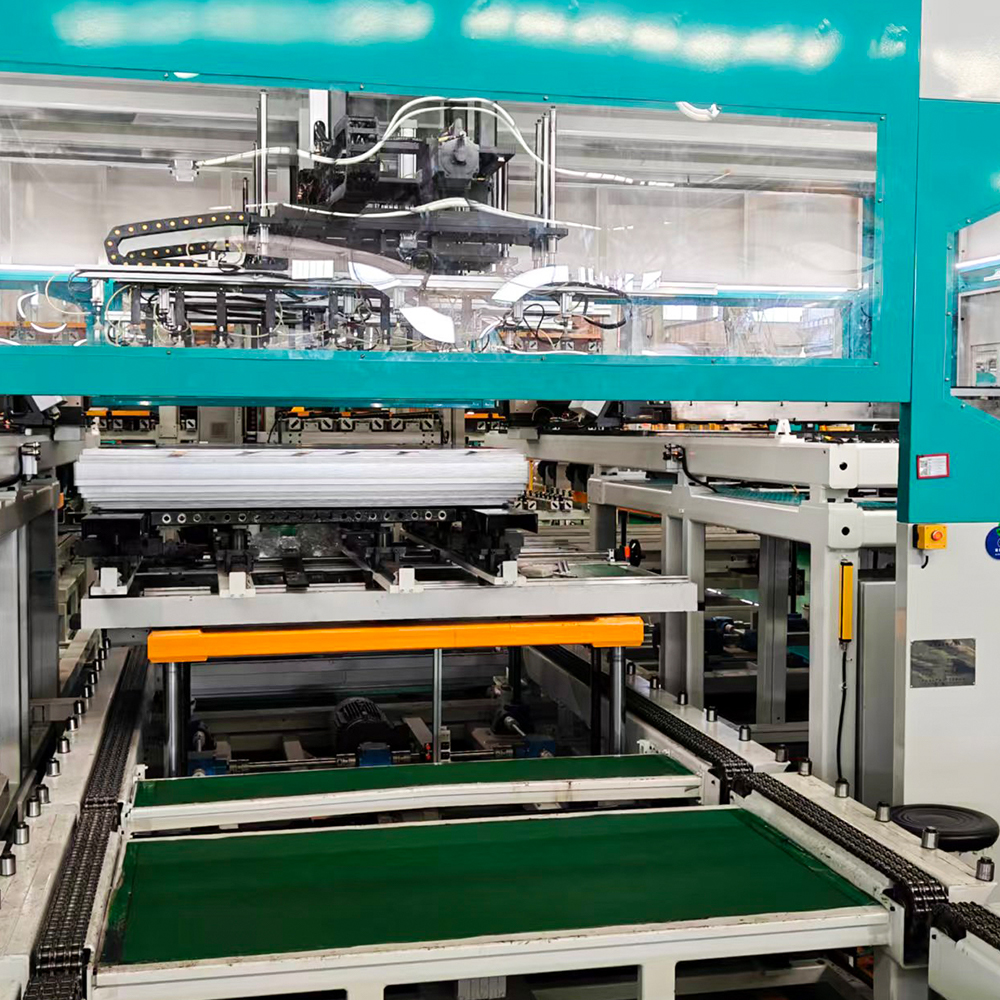 LXD-420-1 Offline Transformer Core Stacking Production LineDesigned for standalone work cells, this offline stacking line accepts columns from shearing lines and automatically assembles laminations per core drawings. It addresses manual stacking issues like sheet damage and inconsistent quality, offering precise batch-oriented control.View Product →
From Cutting Line to Finished Core: A Complete Automated Workflow
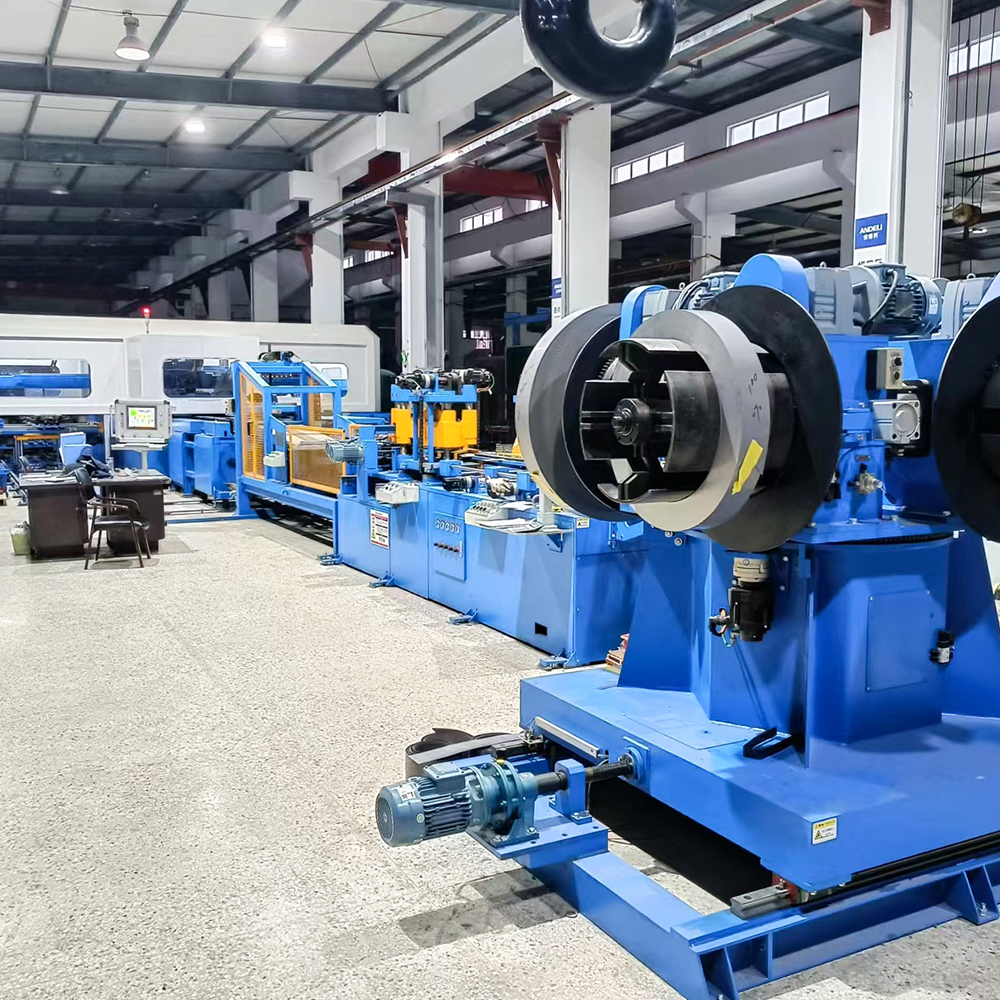
The ZXD-440 performs the stacking function, but the quality of a power transformer core is determined before the first lamination reaches the stack. Silicon steel must be uncoiled, leveled, and cut to precise lengths without burrs or edge damage. A cut-to-length line with stable shear geometry is therefore a necessary partner to the stacking stage.
Jingtianxia's product portfolio covers both sides of this workflow. The HJDZ440 silicon steel cut-to-length line delivers dimensionally accurate laminations that feed directly into the automated stacking process, giving manufacturers a matched pair of equipment rather than a collection of mismatched machines.
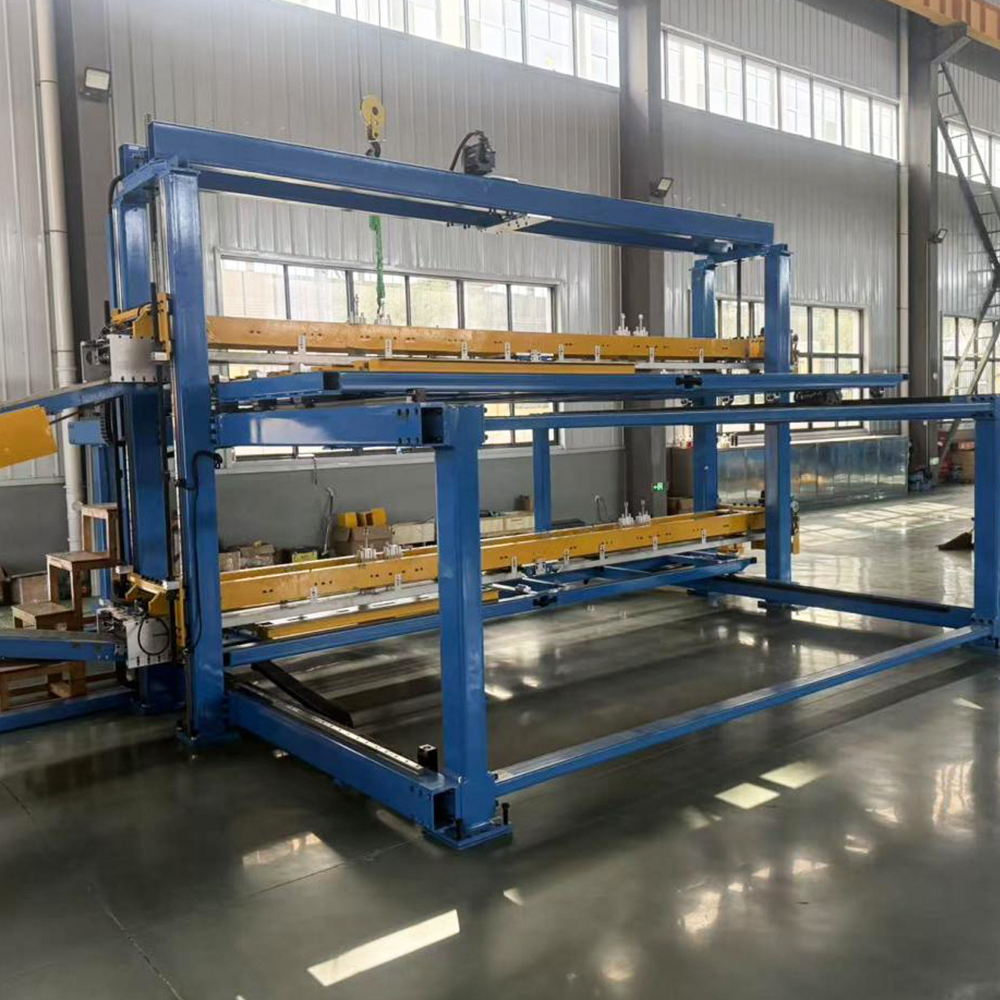 HJ-DZ-440 Silicon Steel Cut-to-Length LineThis high-precision servo-driven shearing line produces dimensionally accurate laminations with ±0.2 mm cutting accuracy. It integrates feeding, punching, and V-punching, and pairs seamlessly with automated stacking equipment to ensure consistent input quality for core assembly.View Product →
Beyond the core line itself, Jingtianxia also designs intelligent workshop warehousing systems and automated logistics lines. This broader capability matters because stacking precision is not only an equipment problem. If laminations are stored incorrectly or transported roughly between processes, even the best stacking line will struggle. A complete automated workflow treats cutting, handling, and stacking as one continuous system.
Frequently Asked Questions
Q1: What sizes of transformer cores can the ZXD-440 handle?
The ZXD-440 is built for large power transformer cores in the medium-to-large capacity class. The achievable lamination width, stack height, and core geometry depend on the specific line configuration, so manufacturers should discuss their core drawings with the engineering team to confirm compatibility.
Q2: How does the inspection system detect defective laminations?
The inspection module checks each lamination optically and dimensionally before stacking. Laminations that fall outside the configured tolerance are automatically diverted to a rejection bin, so defective sheets never reach the stack.
Q3: Can the ZXD-440 be added to an existing production workshop?
Yes, the in-line design allows it to be placed behind a compatible cut-to-length line. Retrofitting a current line involves a site assessment to confirm dimensions, material flow, and interface points, followed by installation and commissioning by the manufacturer's engineers.
Q4: How many operators are needed to run the ZXD-440?
The line is designed to run with minimal direct labor. Operators mainly supervise the process, monitor inspection alerts, and manage material supply at the infeed end. The exact staffing requirement depends on the surrounding production environment and the level of integration with auxiliary systems.
Conclusion
Human error in transformer core stacking is not a question of worker competence. It is a structural consequence of manual processes, where alignment, inspection, and documentation all depend on individual judgment. The ZXD-440 attacks that structure directly by installing precision mechanics and automated inspection at every point where errors have historically entered the process.
For manufacturers of large power transformer cores, the decision to adopt an in-line automatic stacking system is ultimately a decision about consistency: consistent placement, consistent inspection, consistent data, and a consistent path from raw silicon steel to finished core. As transformer core quality upgrades continue to reshape the power equipment industry, automated processing equipment is moving from a competitive advantage to a requirement.
An in-line stacking line does not simply make a factory faster. It makes the factory more predictable, and for a component as critical as a large power transformer core, predictability is the foundation of reliability.

-
Mobile
+86-18351152766
-
E-mail
479279940@qq.com
-
Address
No.3 Park, Jiangcun Village, Liangxu Town, Jiangyan District, Taizhou City, Jiangsu Province, China


Copyright © Jiangsu Jingtianxia Electric Technology Co., Ltd. Rights Reserved.Specializing In Transformer Core Manufacturing
